Do Not Believe In These "Trends" Concerning Childrens Bunk Beds With Mattresses


Childrens Bunk Beds With Mattresses Must Be Safe
Bunk beds can be ideal for saving space. It is crucial that bunk beds with ladders or stairs are securely fastened.
The mattress should also be low-profile to ensure that the surface of bunk bed mattresses for children is at least 5 inches lower than the rails on top. Some bunk beds come with trundle options to sleep three comfortably, which is perfect for sleepovers or when guests are visiting.
Size
Bunk beds are popular space-saving solutions for children's bedrooms. By stacking beds vertically, they provide more floor space to accommodate other furniture such as wardrobes and desks. Bunk beds can also be utilized in dormitories or shared rooms to reduce space.
When deciding on a bunk bed for your child, think about their age and ability to safely climb to the top of the bed. Bunk beds aren't recommended until your child reaches the age of six. Even then, you should follow the safety guidelines set forth by the manufacturer. These include sturdy guardrails and an incline ladder with a solid base, as well as providing enough clearance for height to the ceiling.
The size of the mattress in the bunk bed is another important factor to take into consideration. Bunk mattresses can be found in twin or full sizes, and it's crucial that they fit perfectly within the frame of the bunk bed. Gaps can cause impingement and can affect the stability. Select a mattress with an innerspring or hybrid, memory foam or hybrid construction for your child to ensure comfort and support.
To meet safety guidelines for children, bunk beds mattresses must also be 8-14 inches in thickness. A mattress that is too thin could cause the top bunk to collapse or roll out, which is dangerous for children. You can also opt for a bed with an integrated ladder to make it easier to climb up to the top bunk.
Height
Bunk beds are a great option for rooms for children because they offer extra storage and free up space on the floor. However, prior to buying a bed, it is important to think about the dimensions of the bunk bed since this could impact the security and comfort of the mattress. For example bunk beds have to meet British safety regulations. The rails of the bed need to be at minimum 16cm higher than the mattress to keep children from falling off.
When deciding on a bunk bed, it's also important to consider the ceiling height of fixtures such as fans and lights as these can impact on the overall height of the bed. Also consider whether you want to make use of a ladder or steps to climb up the top bunk, as these require strength and stability or secured securely to prevent them slipping and posing the risk of.
childrens double bunk beds is essential to choose a mattress with a low profile, since this will let the safety rails at the top of the bunk to be raised higher. This is important as the thicker the bed is, the higher the mattress will be. This could block your child's vision and make it more difficult for them to fall off of the bed.
You should also think about whether you'll be using twin or full size mattresses for your bunk bed. If you want to maximize space, a twin-over-full configuration is the best option. It gives each child their own bed and still allow plenty of space for storage. If you're planning to put a King-sized mattress on the bottom it is recommended to choose specialized frames made for this configuration. They'll be more sturdy than the standard bunk frames for beds.
Weight
Bunk beds with mattresses are an ideal solution for families with children sharing the same room. They can to maximize space by fitting two beds into one room, while also providing additional storage space with built-in storage drawers and/or cubbies.
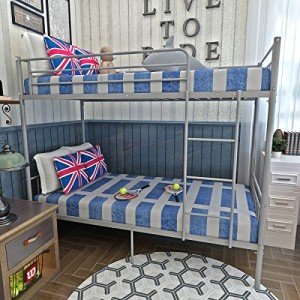
Be sure to consider safety when choosing the bunk bed that has a mattress. This includes safe guardrails on the top bunk, as well as a sturdy ladder or stairs that's firmly connected to the frame using anti-slip components. The slats of a bunk bed should also have ample spacing to prevent entrapment risks.
If kids are sharing the top bunk, pay close attention to the bed's weight capacity and make sure it can accommodate each occupant without exceeding the limit. This is important because it can prevent the onset of structural flaws or failures that may affect the safety and stability of the elevated sleeping area.
Although it's tempting to let children play on their bunk bed (or even climb up the ladder during the time of play) be aware that they're still not yet able to develop the sense of security that would govern their behavior on such an elevated surface. Children older than 6 are typically ready to sleep on the top bunk. However, you, as a parent, will need to determine if your child is ready.
If you are choosing a bunk bed with mattresses, select an all-foam mattress in order to reduce disturbances to your sleep. You should consider a mattress that features cooling technology to keep the bed cool and comfortable, particularly on hot summer nights.
Cooling
Bunk beds can be a stylish and space-saving sleeping arrangement, but it's not as easy as going into a store and picking up the first mattress you see. Mattresses for bunk beds for kids need to have special features that guarantee a the safety of a sound and safe sleep, particularly for children who sleep on the top bunk. They need to be thin enough to meet the federal standards for flammability, and thick enough to keep the child from falling off the top bunk and getting injured. Furthermore, they should be light and low-profile, allowing them to fit within the frame of the bunk bed.
When you are buying a bunk mattress, you should consider its thickness and the material it is made of. As a rule, choose a mattress that is at least 6 inches thick. This will ensure that the mattress is not too high above the safety railings on the top bunk and that they are unable to move out without getting caught. The thickness of the mattress on a bunk bed is also important, as it determines the amount of space your child has on the top bunk.
Another factor to consider when selecting the mattress for your bunk bed is whether or not you want it to be an extremely firm or soft mattress. A mattress for bunk beds that is soft will be more comfortable, however a firmer mattress provides better support for your child's spine. Also, you should take into consideration the amount of storage the mattress can provide. A bunk bed that has a storage option will help you keep your child's room clean and well-organized, and could even aid them in staying productive in school.
Safety
To avoid injuries and accidents mattress beds, bunk beds must be constructed exactly the same way as other types of children's furniture. The first step is to examine the stability of the bed by inspecting every single structure point like the corners where the feet and bed base are attached to the frame. Be sure that all of these are securely fastened and that there isn't any movement or instability at any of the points.
Another important step is to make sure that the foundations of your bunk mattress are strong enough to support the weight of your child as well as their sibling sleeping on top of it. You can test this by applying pressure to the bed at different angles and observing if it shifts or flexes. If it does it is time to replace the mattress foundation.
Once the bunk bed has been installed, you must take steps to ensure that the space surrounding the bed is free of any dangers to tripping. It is essential to remove all furniture that isn't necessary to make room for the bunk bed. Also, you should not allow playing rough or jumping in the bunks. It is important to make it clear that one child is allowed to sleep on the top bed.
It's also a good idea to get your kids to remove toys from the area around their bed on a regular basis. This will prevent accidents due to suffocation and tripping that could occur when kids are climbing up and down from their bunks. It's important that you emphasize that these rules must be followed, even if guests are visiting for an overnight sleepover.